


Heat styling is one of the most common ways to shape and smooth hair. People use flat irons, curling irons, and blow dryers to create different looks quickly. However, many users are unsure which temperature is right for their hair. Choosing the correct heat setting plays a major role in both styling results and hair health.
Heat styling is not about using the highest temperature available. It is about finding the right balance between efficiency and protection. Different hair types respond differently to heat, so temperature control should always match texture and condition.
Read next: Honest review: Tymo Ring Plus straightener and styling tool
What is heat styling?
Heat styling is the use of thermal tools to reshape hair through controlled temperature exposure. These tools temporarily break hydrogen bonds inside the hair structure. When the hair cools, those bonds reform and lock in the new shape.
Common heat styling tools include:
- Flat irons for straightening
- Curling irons for creating curls and waves
- Hot brushes for smoothing
- Blow dryers for shaping and volume
Because heat alters the internal structure of hair, proper control is essential. With the right temperature settings, you get the style you want without unnecessary stress on your strands.
How heat affects hair structure
Hair is primarily made of keratin proteins. Hydrogen bonds inside the hair shaft respond to temperature changes. Heat breaks these bonds, which allows the reshaping. The bonds reform as the hair cools.
However, excessive heat can remove moisture from the hair shaft. It can weaken the outer cuticle layer and reduce elasticity over time. Repeated exposure at high temperatures increases the risk of dryness and breakage.
Scientific research on thermal impact shows that high heat combined with frequent use accelerates structural weakening. Controlled temperature reduces this risk while still allowing styling flexibility.
The right heat settings by hair type
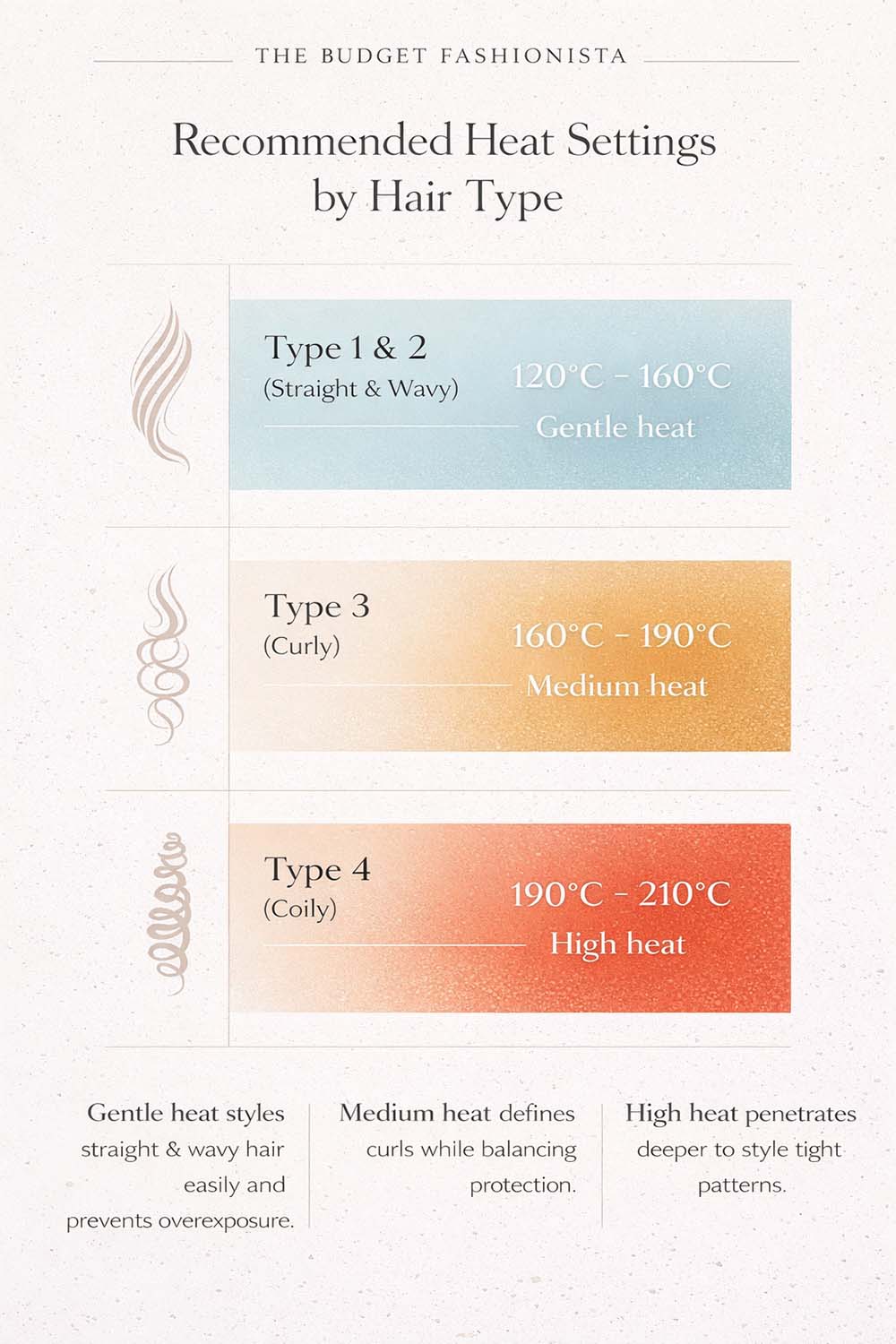
Different hair textures require different temperature ranges during heat styling. Selecting the right setting improves efficiency and reduces unnecessary exposure.
Type 1 and Type 2 hair (straight and wavy)
Recommended range: 120°C-160°C
This hair type usually styles easily because the natural structure is already loose. Lower temperatures often achieve smooth results without excessive heat. Starting at the lower end of the range and increasing gradually helps prevent overexposure.
Type 3 hair (3A-3C curly hair)
Recommended range: 160°C-190°C
Curly hair requires slightly higher heat to reshape defined curls. Medium temperature settings often provide a good balance between effectiveness and protection. If the hair has been colored or chemically treated, staying closer to the lower end of the range is safer.
Type 4 hair (4A-4C coily hair)
Recommended range: 190°C-210°C
Tighter curl patterns require deeper heat penetration to achieve styling results. Higher temperatures may be necessary, but starting low and adjusting gradually is important. Even in this range, it’s best to avoid maximum heat unless necessary.
How to find your ideal heat setting
Finding the right setting requires testing rather than guessing. A simple approach can help determine what works best.
- Start at the lowest recommended temperature for your hair type. Test one small section first. Observe whether the style forms in one pass or requires repeated passes. If results are insufficient, increase the temperature in small increments.
- Watch for signs such as excessive steam, burning smell, or visible dryness. These signals indicate that the temperature may be too high.
- Get the style you want with the minimum effective temperature.
Factors that influence heat styling decisions
Temperature alone does not determine safety. Other factors also play a role.
Hair density matters. Thicker hair may require slightly higher heat for penetration. Hair condition is equally important. Bleached or chemically treated hair usually needs lower settings due to weakened internal bonds.
Tool quality also affects results. Devices with stable temperature control and even heat distribution reduce the need for repeated passes. Consistent heat lowers overall exposure.
- When evaluating tool quality, look for features that give you precise control. A clear digital display with adjustable temperature settings allows you to dial in the exact heat recommended for your hair type, eliminating guesswork.
- Equally important is the tool’s ability to maintain a consistent temperature throughout use. This avoids dangerous heat spikes that can cause hot spots and damage.
Advanced materials also matter. Coated ceramic plates or tourmaline technology promote smoother gliding and reduce friction during styling.
Brands that prioritize these engineering details design their tools to provide the stable, even heat distribution discussed above. TYMO, for example, builds these principles into products like the TYMO Ring Plus, which uses advanced heater technology and a high-precision sensor to maintain consistent temperature. This allows you to style effectively at lower, safer settings.
Choosing a tool with these capabilities is an investment in both your styling results and the long-term resilience of your hair.
Read next: Nume Silhouette review from The Budget Fashionista
Best practices for safer heat styling
- Using heat protectant before styling creates a protective layer that helps reduce moisture loss. It should be applied to dry hair before any hot tool touches the strands.
- Avoid repeatedly passing the tool over the same section. Multiple slow passes increase heat exposure. Working in small sections improves efficiency and reduces repetition.
- Cleaning tools regularly ensures even heat distribution. Product buildup can interfere with performance and increase uneven hot spots.
- Limiting the frequency of high-heat styling sessions also supports long-term hair health.
Heat styling the right way
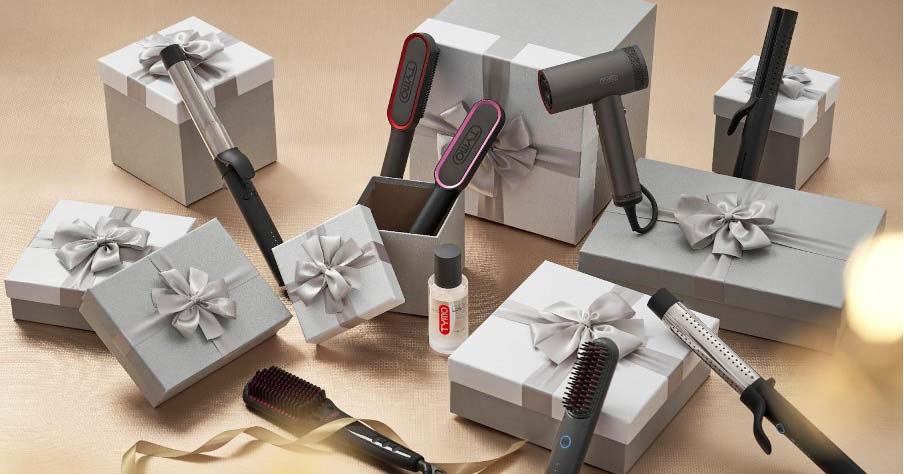
Heat styling is not inherently harmful. The outcome depends on how temperature is controlled and applied.
Choosing the right heat setting based on hair type improves results while minimizing risk. Starting at the lowest effective temperature, adjusting gradually, and using heat protection are key strategies.
When heat styling is approached with awareness and control — and supported by tools designed for consistent performance, like those from TYMO — it remains a practical and flexible way to create looks you love without unnecessary damage.